ISPRS Scientific Initiatives
List:
- 2023, Benchmarking of publicly available software solutions for close-range point cloud processing of forest ecosystems
- 2023, Benchmarking of absolute and relative positioning solutions under GNSS denied environments for mobile geomatics, Cooperation
- 2025, International contest of automated individual-tree delineation from close-range point clouds
Benchmarking of publicly available software solutions for close-range point cloud processing of forest ecosystems
PIs: C. Cabo, University of Oviedo, Spain, & Xinlian Liang, Wuhan University, China
CoIs: K. Calders (Ghent University, Belgium), M. Eichhorn (University College Cork, Ireland), M. Hallous (TU Wien, Austria), E. Lines (University of Cambridge, UK), S. Marselis (Leiden University, Netherlands), M. Mokroš (Czech University of Life Sciences, Czech Republic), A. Murtiyoso (ETH Zürich, Switzerland), S. Puliti (NIBIO, Norway), N. Saarinen (University of Eastern Finland, Finland), K. Stereńczak (Forest Research Institute, Poland), C. Torresan (CNR, Italy), Y. Wang (Finnish Geospatial Research Institute, Finland)
Although recent advances in close-range 3D technologies have greatly increased the availability of data for forest measurements, standardised procedures for processing and extracting information from forest point clouds are lacking. A large research community is working on algorithms that can automate forest mapping and monitoring from close-range point clouds.
Publicly available implementations of such algorithms are still scarce, however, and there is no comprehensive resource of either available software or rigorous comparison of their performance. This means that potential users face a lack of clarity on the different options available, or their pros and cons.
This project aims to compile and evaluate the performance of existing software, algorithms and implementations designed for forest mapping and monitoring with terrestrial point clouds. It will specifically focus on publicly available software solutions, regardless of their license type (free, open-source, commercial), or implementation (standalone software, libraries, packages, scripts).
We will start with a preliminary list of all software solutions identified as relevant by our research team and collaborators, and new additions are expected during the project. The software solutions will be assessed and compared, including installation and running requirements and instructions. Further, their performance will be tested using existing benchmark data from a variety of forest plots and stand conditions. Key metrics including tree location, diameter, height, and stem volume will be assessed and reported alongside processing time with commercial-grade computers.
We will make the outputs of our benchmarking exercise available in a scientific article, a public database, and short overview videos.
Benchmarking of absolute and relative positioning solutions under GNSS denied environments for mobile geomatics
PIs: Y. Wang, Finnish Geospatial Research Institute, Finland, & L. Chen, Wuhan University, China
CoIs: H. Yao (Wuhan University, China), X. Wang (Wuhan University, China), H. Qi (Wuhan University, China), T. Hakala (Finnish Geospatial Research Institute, Finland), J. Muhojoki (Finnish Geospatial Research Institute, Finland), J. Wang (China University of Mining and Technology, China), Z. Liu (Chinese Academy of Surveying and Mapping, China)
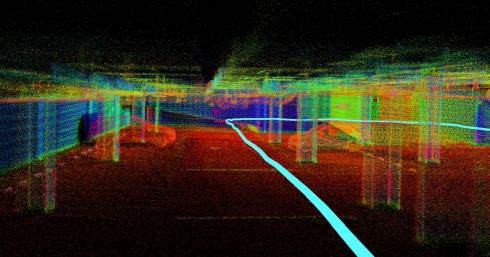
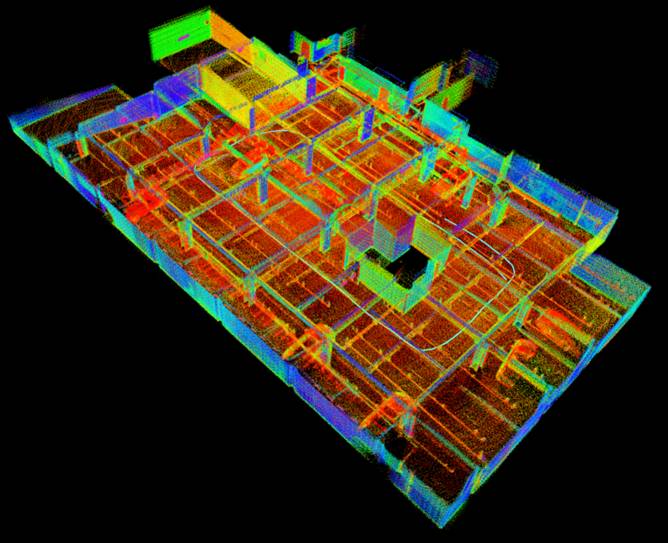
Accurate localization and positioning in global navigation satellite system (GNSS) denied environments, such as indoor/underground spaces, urban canyon, and forests, has been confronted with profound challenges because of the great complexity of perception tasks. Different sensors, algorithms, and combinations of those have been developed in past decades, which provide a great variety of possible solutions that deliver different positioning accuracies. However, a rigorous evaluation of the positioning accuracy of mainstream solutions is missing, mainly because of the difficulties in acquiring reliable ground truth for referencing and the lack of comparable test/application conditions. A comprehensive benchmarking will be carried out in this project based on the comparisons of solutions that consist of different combinations of a few most used positioning technologies, including inertial measurement unit (IMU), ultra-wideband (UWB), camera, light detection and ranging (lidar), and radio detection and ranging (radar), as well as emerging technologies, such as 5G, and sound positioning. High-precision millimeter-level survey standard ground truth references will be acquired for indoor and outdoor test sites and applied for the evaluations, to assist quantitative benchmarks about the robustness and the positioning accuracies of different solutions using absolute and relative sensors. The outcomes of this project will help both researchers and practitioners to learn their capacities and to select suitable sensors and solutions in their applications. The outcomes of the project will be reported as conference papers in workshops and as research papers in open-access format, to broadcast the project findings to a wide audience.
International contest of automated individual-tree delineation from close-range point clouds
PIs: Liang, Wuhan University, China
CoIs: Y. Wang (Wuhan University, China), H. Qi (Wuhan University, China)
Individual trees are basic elements in forest environments. Their size, distributions, and structures play essential roles in biophysical activities. The quantitative description of three-dimensional (3D) forest structure is, however, extremely difficult because of the complexity and heterogeneity of forest systems. Measurements of 3D structure using conventional methods in the field are laborious, imprecise and often impractical. The recent development in close-range sensing technologies significantly enhances the capability of forest investigation, where close-range sensing observes objects at a target-to-sensor distances ranging from a contact or non-contact short range up to several hundred meters.
The past two decades have witnessed extensively studies on the individual tree delineation (ITD) from close-range sensing data. Machine learning (ML) based methods have been widely studied. Current ML solutions have been demonstrated to be able to achieve pretty accurate ITD results in easy forests. When the forest conditions become more challenging, clear omission and commission errors can be expected. Recently, Deep learning (DL) based method have been considered as a new cornerstone of algorithm development that provide feasible solution for accurate forest delineation. Several works have tried to segment forest for individual trees using DL methods.
ML methods rely on expert knowledge and experiences. They may have limited scalability, if the models are not well generalized across different application domains. DL methodologies are data-driven, which necessitate substantial quantities of data for training and testing. A common challenge for the algorithm development is the lack of standard datasets. Overall, the quality of training datasets, e.g., the representativeness and the correctness of annotation significantly impact the performance of the trained model, e.g., the applicability, reliability, and transferability. Both ML and DL require high-quality of annotated dataset for algorithm development. Particularly, for DL methods, this requirement is more critical and urgent.
Among various data sources, point cloud data allows a direct 3D digitization of forest and tree structures and enables an automated estimation of structural parameters at a high level of details and accuracy. Particularly, terrestrial laser scanning (TLS) provides the highest geometric data quality on a plot level. TLS is capable of providing dense points at millimeter level, and its data are usually less noisy in comparison with other data sources, such as mobile and UAV data, owe to the high quality hardware and static acquisition mode. In general, the results achieved from high-quality TLS data can be understood as a benchmark for results from other 3D point cloud data.
This scientific initiative project aims to clarify the current state-of-the-arts of ITD from close-ranging point clouds, to study the strength and limitation of current solutions, and to promote the development of new ML/DL approaches for ITD. An international contest of automated ITD from close-ranging point clouds will be launched. The contest aims to encourage participants around the world to develop their own ITD methods and to demonstrate the method performance in the contest. The contest will provide datasets and references. The results will be evaluated through standardized procedures and the results will be announced after the contest.
WG III/1